Bringing everyday needs closer
Exploring alternatives to car dependency in rural parts of the Netherlands
What if reducing car dependency started with reducing the need to travel?
For a group project at the University of Amsterdam, we investigated how Overijssel, a Dutch province with dispersed towns and villages, could improve access to everyday needs. We developed proposals at regional and neighborhood scales, exploring both better transport connections and ways to bring services closer to residents.
- Context
- Exchange semester · Urban Planning: Moving in the City
- Team
- Five students
- My focus
- Research synthesis and proximity proposals
- Deliverable
- Regional and local planning proposals
Understanding the problem
Our research included a site visit, a conversation with the region’s head of urban planning, and analysis of planning documents, demographic data, and existing services.
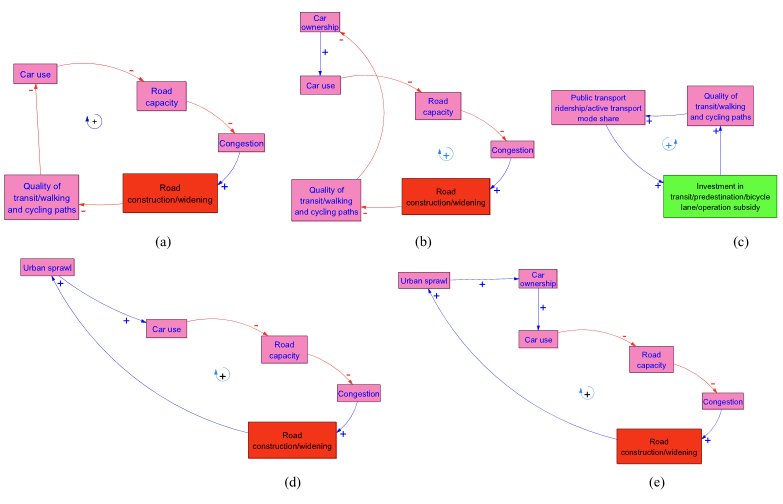
We examined how car dependency reinforces itself: dispersed development increases travel distances, making driving more practical and walking, cycling, and public transport harder to sustain.
“How could journeys improve, and which journeys could become unnecessary?”
My contribution
I led the proximity proposals, exploring how changes in work, services, and housing could reduce the need for everyday car trips.
I connected research on remote work and digital services with spatial proposals for more concentrated development and shared workspaces. Alongside the team’s transport proposals, this offered another way to approach the same challenge: changing where and how people access what they need.
The strategic direction
Drawing on the PBL Netherlands Environmental Assessment Agency’s “Fast World” future scenario, we explored a combination of:
- 01Remote access to work and services, reducing some commuting and administrative trips.
- 02Delivery networks, bringing everyday goods closer to residents.
- 03More concentrated housing near amenities, limiting further dispersal.
- 04Shared workspaces, supporting remote work beyond the individual home.
We used the scenario to explore a possible future, with assumptions that would need testing.
The trade-off: convenience and connection
Our reflection exposed a weakness in the approach. Making services available remotely could reduce travel while also removing reasons to leave home and interact with other people. Technology-dependent services could also be difficult for some older residents to use.
That complicated our definition of access. Receiving a service conveniently and having opportunities to participate in community life are both important considerations.
Outcome
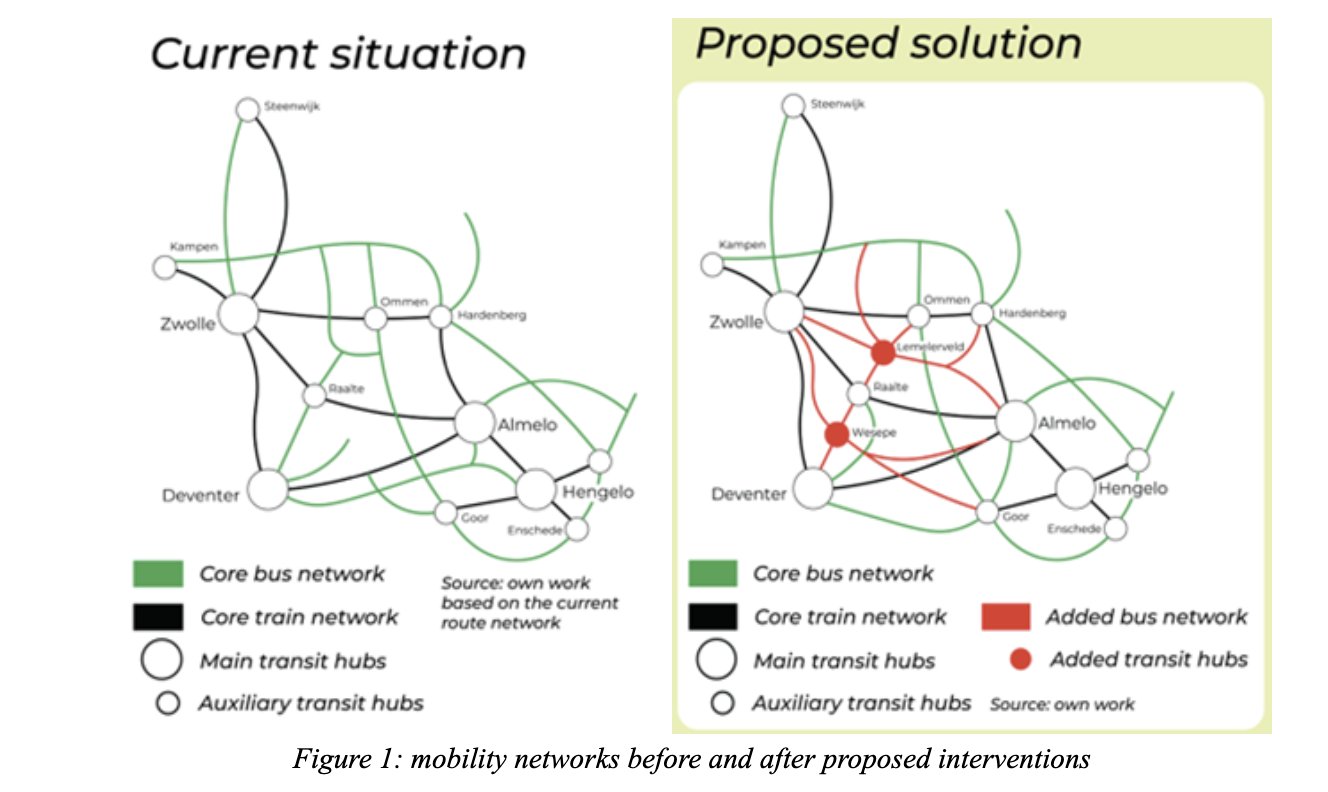
We produced a set of regional and local planning proposals, supported by maps, research, and diagrams connecting transport decisions with land use.
The project remained at proposal stage. Its value was in developing a direction, explaining the assumptions behind it, and identifying where it could fall short.
“An infrastructure or technology proposal only works if people can—and want to—use it.”