Oldenborg: Preserving a Place to Belong
Research synthesis and concept development
Oldenborg, a dormitory and dining hall centered on language learning and cultural exchange, was preparing for demolition and redevelopment. Our brief was to imagine a meaningful way to commemorate it.
How could we preserve the sense of belonging Oldenborg created as the building itself changed?
My contribution
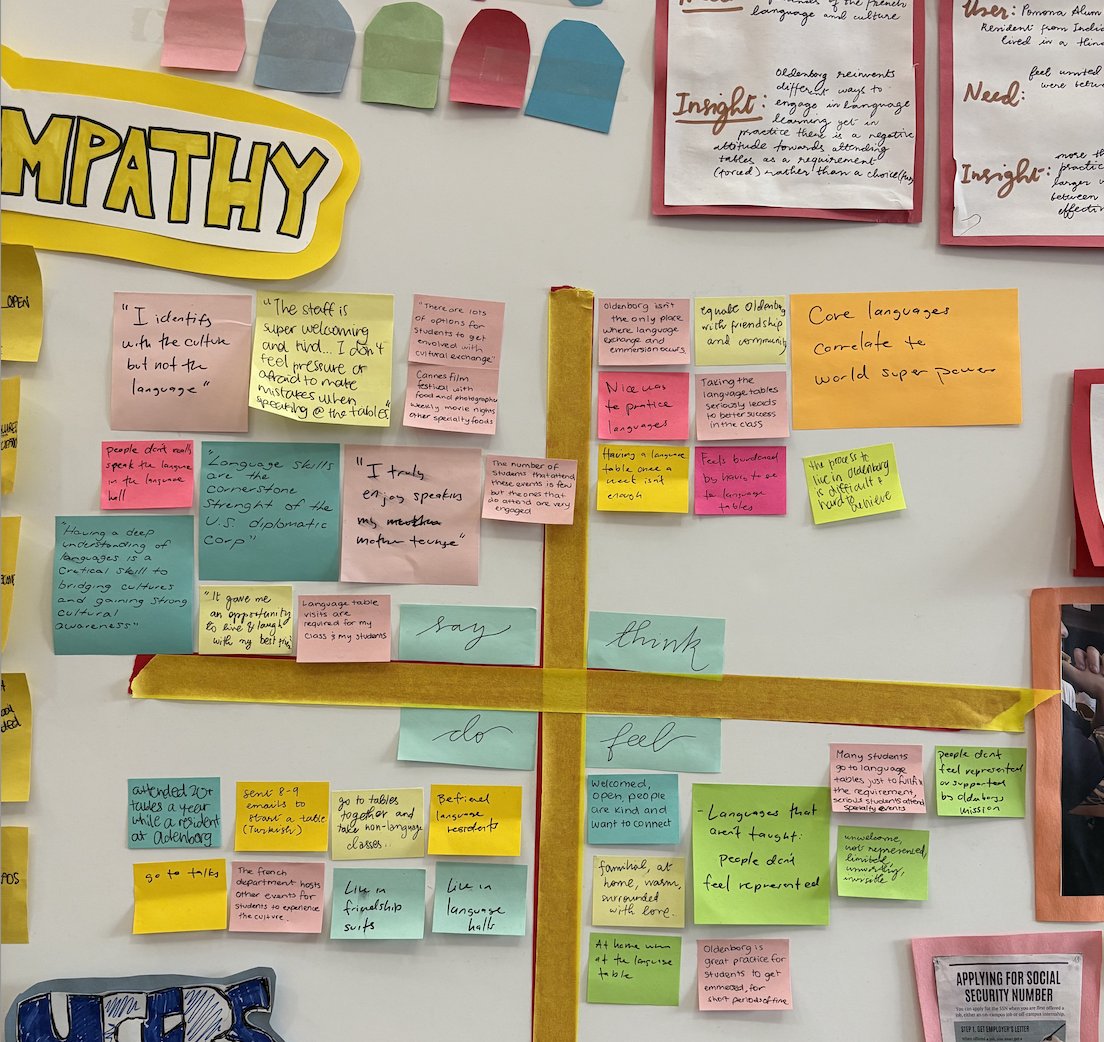
I synthesized our team’s interview notes into user needs, insights, and connections across experiences. I translated those findings into “How might we” questions and contributed to idea generation, helping connect our concepts to what people valued about the space.
What the interviews revealed
Oldenborg’s significance extended beyond its language programs. Interviewees described a place where they maintained cultural identities, found community, and built relationships across national differences.
An international student from Italy described its importance to his sense of belonging. An alum from India recalled living with friends from Pakistan during geopolitical tensions, finding connection within their shared suite.
At the same time, some students felt that the languages offered did not fully represent their cultures.
“Commemorating Oldenborg meant considering the relationships and experiences it made possible, alongside the building itself.”
Two moments, two responses
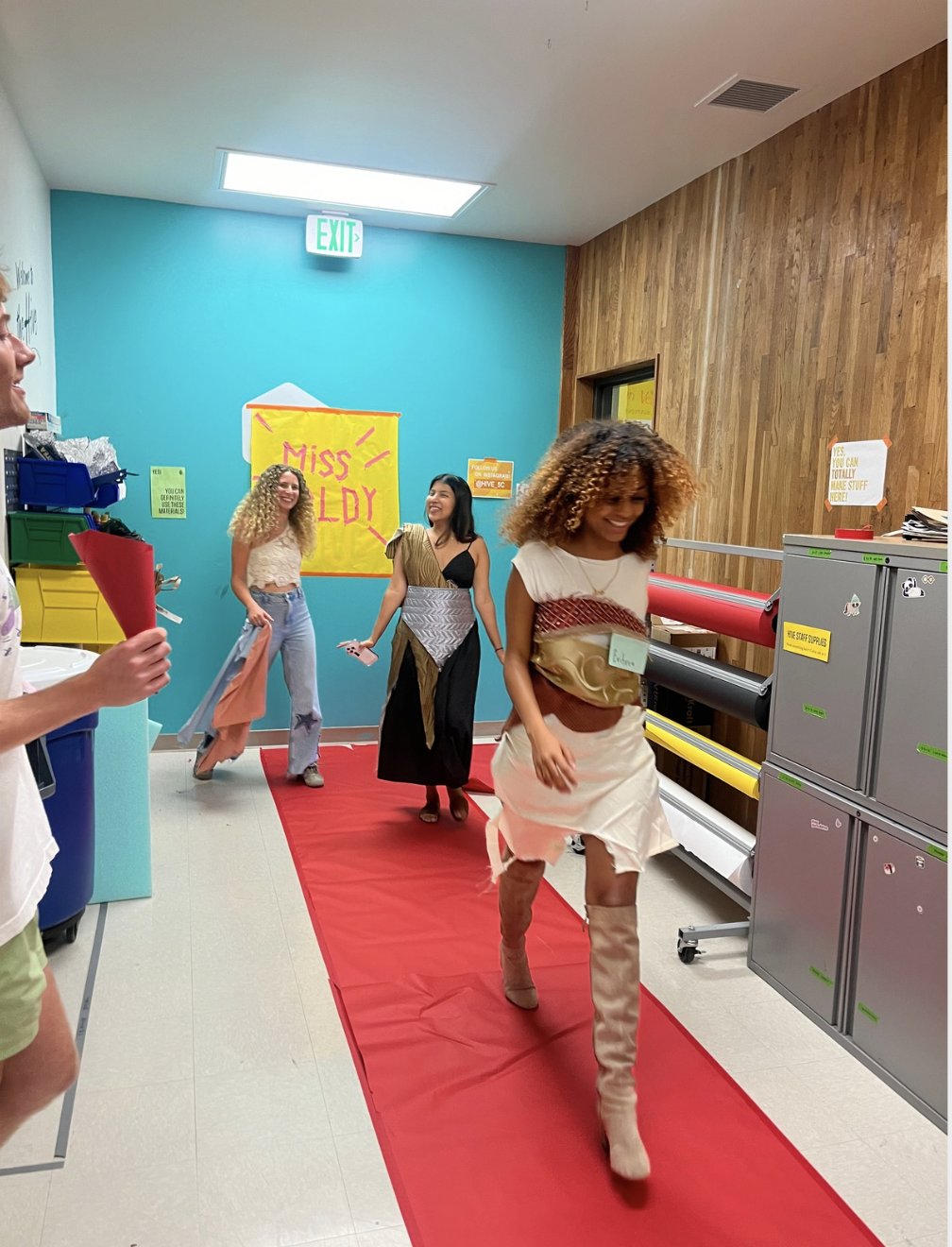
An Oldenborg fashion show
Could celebrate cultural expression before demolition or during redevelopment. Through clothing, music, and participation, it would create an opportunity to represent cultures beyond the existing language programs.
Skyspace South
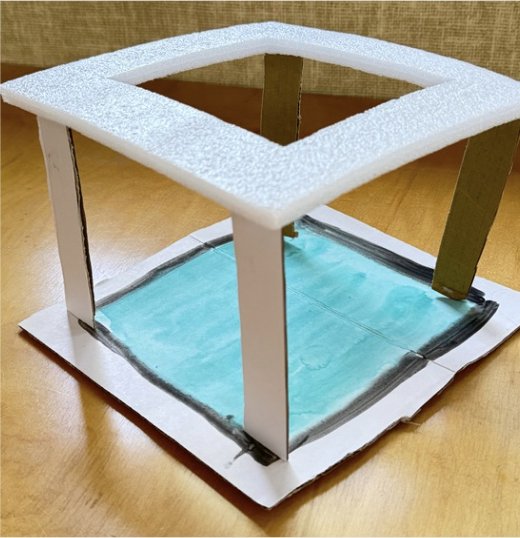
Would become a permanent gathering and reflection space within the redevelopment, incorporating materials from the original Oldenborg.
We explored two concepts addressing different stages of the transition.
Why we prioritized a permanent space
The fashion show offered a moment of celebration. We chose Skyspace South as our final proposal because it could provide an enduring place for people to return to.
Our precedent was James Turrell’s Skyspaces, including the existing installation at Pomona. We were particularly drawn to the idea of sitting in silence together, associated with the Quaker tradition that informed Turrell’s work.
For our team, this suggested another way to approach cross-cultural connection: sharing a space and an experience without requiring everyone to speak the same language or immediately begin a conversation.
What early feedback told us
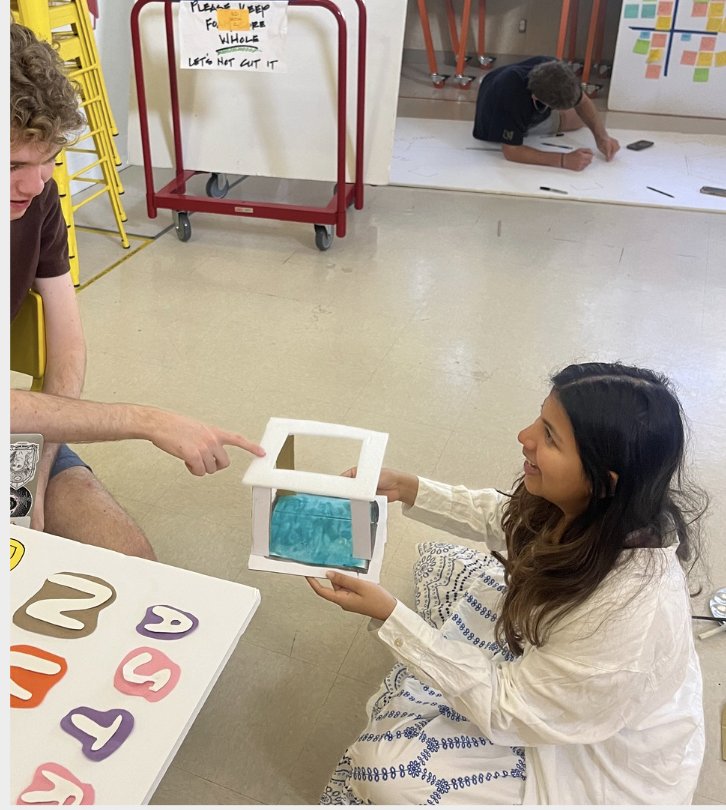
We gathered feedback on Skyspace South through three interviews and on the fashion show through four.
Participants responded positively to reusing Oldenborg’s materials and to the Skyspace’s potential for reflection and interaction. They also raised a question we would need to resolve: how would visitors understand the space’s purpose?
The fashion show prompted enthusiasm for participation and creative expression, alongside concerns about cultural appropriation, gender dynamics, and its temporary nature.
These conversations informed our assessment of the concepts. They did not establish whether either would strengthen belonging in practice.
The proposal
Skyspace South combined inward-facing seating, an opening to the sky, and materials reclaimed from Oldenborg. Its intended role was to carry part of the building’s history into a new setting for shared presence, reflection, and conversation.
The proposal remained conceptual. A next step would be to test the seating arrangement and how the space’s purpose is communicated, observing whether people feel comfortable entering, staying, and sharing it with others.